
Are You Already Imposing Serious Risks on Your Data Security?

It’s easy to believe that every critical threat to your digital assets lurks in the shadows of the dark web or comes screaming through a sophisticated external cyberattack. You likely invest significant resources in perimeter defenses, next-generation firewalls, and advanced threat detection systems, operating under the assumption that the integrity of your digital environment is secure as long as these external boundaries hold fast.
But what if you are already operating under a fundamental miscalculation? You may be so focused on building a fortress wall that you overlook the open service entrance you’ve left unguarded. The most serious and insidious risks to your enterprise often originate not with the faceless hacker halfway across the world, but from the everyday operations, unexamined processes, and internal oversights within your own domain. This quiet crisis of digital trust stems from assumptions you make about system configurations and, most critically, the predictable behaviors of your own teams.
A robust framework of information security demands a shift in perspective. You must acknowledge that the greatest liabilities are frequently the simplest: an unpatched server, an overly permissive access role, or a single employee clicking a malicious link. These vulnerabilities are compounded by the technical debt accumulated over years of growth and the failure to implement mandatory data protection policies consistently across all departments.
The Human Element: The Foundation of Vulnerability
While you pour resources into hardening your networks and implementing complex technological safeguards, you must acknowledge a simple, uncomfortable truth: the most exploitable vulnerability in your entire system is almost certainly the person sitting at a desk. The human element is the easiest vector for attack, not because your employees lack intelligence, but because they are prone to error, susceptible to pressure, and subject to policy fatigue. When your data protection strategy fails to account for normal human behavior, you create a catastrophic gap that no amount of perimeter technology can close.
The Ever-Present Threat of Phishing and Social Engineering
You are constantly fighting a losing battle against the ingenuity of social engineering. Attackers no longer rely on obvious, poorly worded emails; instead, they craft highly personalized attacks known as spear phishing, which leverage publicly available information security about your company or staff. These meticulously designed communications can bypass email filters and convincingly prompt an employee to take a compromising action. Your security awareness training, while mandatory, often becomes a perfunctory exercise, a box to check rather than a genuine change in behavior. This creates a dangerous paradox: your team knows what phishing is but may struggle to identify an attack when it uses contextual details, urgency, or authority to pressure them into immediate compliance. You must shift your focus from simply informing staff to actively testing and shaping their reactions in a high-stakes, real-world simulation environment.
Weak Passwords and Policy Fatigue
Your employees' reliance on weak or reused passwords remains a persistent and unnecessary risk to your information security. In a typical organization, staff must manage dozens of different accounts, leading inevitably to the selection of simple, memorable credentials. The moment a single employee uses the same easy password for a low-value external service and your high-value corporate network, the integrity of your system is severely compromised. This vulnerability is compounded when you fail to enforce multi-factor authentication (MFA) across all critical enterprise applications. Relying on single-factor authentication in today's environment is akin to leaving the key under the doormat. You must mandate MFA as a non-negotiable baseline for all access, accepting no exceptions, because the cost of this minimal inconvenience pales in comparison to the fallout of a credential-stuffing attack. Effective data protection policies require you to make the simple path the secure path.
Unchecked Insider Threats and Access Management
You cannot afford to ignore the danger posed by insider threats. This risk is not solely about a malicious employee intentionally selling secrets; it more frequently involves a well-meaning employee who accidentally misuses access privileges. When you grant users more access than their job function strictly requires, a practice known as privilege creep, you dramatically increase the scope of potential damage. A compromised account that has administrative rights across multiple systems can rapidly become the point of entry for a crippling breach. Implementing the Principle of Least Privilege (PoLP) is therefore paramount. You must regularly review and revoke unnecessary access rights. Furthermore, you need clear policies for handling departing employees, ensuring that their access to all critical information security systems is terminated immediately upon separation. Neglecting these basic housekeeping measures leaves wide, open pathways for both accidental and deliberate compromise, demonstrating a fundamental lapse in your organizational approach to internal risk management.
The Hidden Holes in Your Digital Armor
While human error provides a convenient explanation for many breaches, you must also look deeper into the architecture you’ve built over time. This is where technical debt resides, the accumulation of suboptimal solutions, quick fixes, and deferred maintenance that acts as a silent, continuous drain on your enterprise's information security budget and resilience. These issues represent systemic flaws that hackers actively seek out, knowing that complex infrastructure often means complex, unaddressed vulnerabilities. Addressing these hidden holes requires more than just adding a new security tool; it demands a critical overhaul of how you manage your core digital assets.
The Critical Role of Software Data Security in Patching
The lifecycle of every piece of software data security running in your environment involves a race between the developers who create patches and the attackers who discover and exploit vulnerabilities. If your patching cadence is slow, inconsistent, or non-existent, you are deliberately operating systems with known, published vulnerabilities. You simply cannot afford to view patching as a low-priority maintenance task. When a critical vulnerability is announced, you have a brief window of time before automated bots begin scanning the internet for systems yet to be updated. Failing to patch creates a high-risk liability where your entire environment could be compromised by an exploit that is months or even years old. You must establish an aggressive, validated patching schedule that prioritizes mission-critical systems and accepts zero tolerance for known exposure periods.
Misconfigurations in Cloud Environments
The migration to the cloud offers immense flexibility and scalability, but it introduces a new and frequently misunderstood set of risks to your data protection strategy. The responsibility model is often misinterpreted; while the cloud provider secures the underlying infrastructure, you remain entirely responsible for the security in the cloud, meaning the configuration of your services, the permissions you assign, and the storage you utilize. It is alarmingly easy to make a small error, such as leaving a storage container publicly accessible or setting up overly permissive Identity and Access Management (IAM) roles. These misconfigurations are one of the leading causes of large-scale information security incidents today, providing attackers with a clean, unauthenticated entry point. You need automated tools for continuous cloud security posture management (CSPM) to constantly monitor your environment and flag configuration drift before it becomes a breach vector.
Lack of Network Segmentation
In many organizations, the internal network remains largely "flat," meaning that once an attacker breaches the perimeter, perhaps through a compromised laptop or a successful spear phishing attempt, they have unrestricted access to move laterally throughout the entire system. This lateral movement is the primary way breaches escalate from minor incidents to catastrophic compromises of core business functions. Without network segmentation, your core servers are immediately exposed to an attacker who has only gained initial access to a single user workstation. You must adopt a strategy of network isolation, often referred to as micro-segmentation, to create small, separate security zones within your network. This ensures that if one part of your system is compromised, the attacker's visibility and movement are severely restricted. This approach to data protection limits the blast radius of any successful intrusion and buys your incident response team critical time to neutralize the threat.
When Procedures Fail
It is common to view security as a purely technical challenge, one that is solved by purchasing the latest hardware or subscribing to the most advanced software. However, the most profound risks to your enterprise often stem from deficiencies in governance, documentation, and procedural discipline, the operational blind spots that leave your technological safeguards unmanaged and unmonitored. While firewalls and encryption keys are essential, they are only as effective as the policies and processes you put in place to govern them. Ignoring these procedural deficits is a direct threat to long-term information security.
Ignoring the Essential Data Security Measures
You must recognize that true data protection is a continuous activity, not a set of tools you install once. When you fail to implement continuous logging, monitoring, and audit trails across your critical systems, you are essentially operating without visibility. If a breach occurs, you lack the forensic evidence required to understand the intruder’s lateral movement, the data they accessed, or the duration of their presence. Furthermore, you cannot rely solely on passive monitoring. Implementing proactive data security measures involves establishing real-time alerts that trigger on anomalous behavior, such as a user accessing sensitive files outside of normal business hours or an administrative account attempting to access a new server. Without these essential measures, you are simply hoping a breach won't happen, rather than actively hunting for one. You need to transition from reactive defense to persistent surveillance and investigation.
Missing or Outdated Incident Response Plans
The failure to maintain a current and actionable incident response plan is one of the quickest ways to turn a contained technical incident into a major business crisis. When a breach is discovered, your first few hours of response are the most critical for containment, forensic preservation, and minimizing financial damage. If you do not have a well-rehearsed plan, your team will inevitably resort to improvisation, leading to panic, miscommunication, and critical delays. This confusion can allow an attacker to destroy evidence, further exfiltrate data, or entrench themselves deeper within your network. You must ensure your plan is not a static document filed away somewhere; it must be a living procedure that is regularly tested through simulations. These exercises must involve not just the IT team, but also legal, communications, and executive leadership, as the fallout of an attack extends far beyond the server room.
Overlooking Regulatory Compliance
While compliance with external regulations, such as those governing privacy or industry standards, is often viewed as a burden, failing to meet these mandates creates massive, predictable financial and reputational risks. Regulations like the General Data Protection Regulation (GDPR) or the Health Insurance Portability and Accountability Act (HIPAA) establish a minimum baseline for protecting personal and sensitive information security. If you treat compliance merely as a checkbox exercise, you risk leaving crucial technical gaps unaddressed. Furthermore, non-compliance can result in severe financial penalties, the cost of which can dwarf the investment required for true security implementation. You must integrate regulatory requirements directly into your daily operational and development procedures, recognizing that meeting compliance standards is simply the floor of acceptable data protection, not the ceiling of ultimate security. You should consistently audit your alignment with these external obligations to prevent entirely avoidable legal and fiscal liabilities.
Implementing a Proactive Defense Strategy
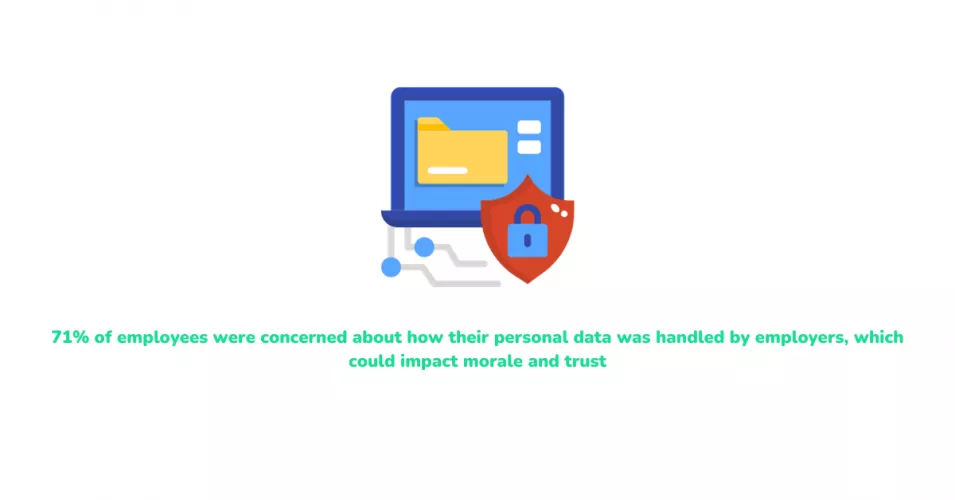
Having identified the critical vulnerabilities stemming from human action, technical debt, and operational neglect, you must now pivot toward a posture of proactive, continuous defense. Achieving true information security requires abandoning the reactive approach of simply cleaning up after an incident. Instead, you need to embed security measures so deeply within your daily operations and technical architecture that risks are contained by design, not by reaction. This demands strategic investment in new philosophies and foundational technologies that assume threats are already present inside your network.
Embracing Zero Trust Architecture
The old security model was a hard shell around a soft interior; once an attacker breached the perimeter, they had free rein. The Zero Trust architecture demands a complete reversal of this thinking: never trust, always verify. You should operate under the assumption that every user, device, and application attempting to connect to your resources, whether internal or external, is a potential threat. This fundamental shift requires you to verify and authenticate every access request, no matter where it originates.
Implementing Zero Trust drastically alters your internal data security model. It moves access control from the network edge to individual resources. This means micro-segmentation becomes mandatory, ensuring that a single compromised device cannot grant an attacker unrestricted lateral movement. Access is based on granular, context-sensitive policies that consider user identity, device health, and resource sensitivity before granting the least privilege necessary for a specific task. By making this transition, you are not merely adding another layer of defense; you are fundamentally redesigning the relationship between users and resources, ensuring that even privileged users must continuously justify their need for access. This is a critical investment in your future resilience and a rejection of outdated trust models that have proven costly. Zero Trust represents a powerful strategic commitment to your long-term data protection.
Deep Dive into Encryption and Data Masking
Data remains the lifeblood of your organization, and your primary duty is to protect it, regardless of its state. You should therefore prioritize two critical techniques: encryption and data masking. Encryption ensures that even if an attacker manages to exfiltrate data or compromise a storage volume, the data remains unreadable and unusable. You must apply robust encryption both in transit (using protocols like Transport Layer Security/TLS for all communication) and at rest (encrypting databases, filesystems, and cloud storage containers). Failing to encrypt data at rest, particularly in the cloud, is one of the easiest and most frequently exploited lapses in information security.
Furthermore, you need to embrace advanced data protection techniques for non-production environments. It is standard practice for developers and testers to require realistic datasets, but providing them with live, sensitive customer information creates massive and unnecessary risk. Data masking and tokenization replace sensitive fields with fictitious or scrambled data that retains its structural integrity (allowing testing to proceed) while rendering it useless to an unauthorized party. You must make it a mandatory policy that sensitive production data never touches non-production environments without being first subjected to masking or anonymization protocols. This simple procedural change significantly reduces your exposure to both internal and external threats targeting testing environments.
Continuous Auditing and Vulnerability Management
Your security efforts should transition from periodic check-ups to continuous, real-time health monitoring. Relying on annual penetration tests or security audits provides only a snapshot in time and leaves you blind to vulnerabilities that emerge in the weeks and months between assessments. To maintain effective data protection, you need a comprehensive, always-on vulnerability management program.
This program must incorporate automated tools that continuously scan your network, applications, and operating systems for misconfigurations, missing patches, and new zero-day exposures. More critically, you must utilize Security Information and Event Management (SIEM) solutions. These tools aggregate logs from every device and application in your network, providing the centralized, real-time visibility necessary to identify suspicious patterns that indicate an active intrusion. SIEM allows you to move beyond simply seeing an error message to connecting seemingly disparate events, such as a failed login attempt on a server followed by an unusual file transfer, into a coherent narrative of a potential breach. The investment in these monitoring capabilities ensures that you are not merely waiting for the inevitable breach notification; you are actively and persistently hunting for threats across your entire environment, making continuous auditing the backbone of your proactive information security strategy.
Why OrangeHRM?
As you seek to implement a proactive defense, you must ensure your most sensitive human capital information is protected by industry-leading security protocols. Your employee data, which includes personal identities, financial records, and performance metrics, represents a critical asset that demands the highest standard of protection. OrangeHRM provides the best HR software solution, designed with robust security measures in place to safeguard this critical information. While the platform offers comprehensive modules for every aspect of the employee lifecycle, from recruitment and onboarding to performance management and analytics, its true value lies in its built-in commitment to data protection. Our architecture is designed to handle this sensitive data with integrity, ensuring privacy, access control, and compliance are paramount. We empower you to manage your global workforce data with the confidence that it is shielded from the risks discussed throughout this article. Take the essential next step in solidifying your internal risk management strategy. Book a FREE demo with OrangeHRM today to see how our software can protect your critical employee data.